Six truths about venue mobility, from the operators living it
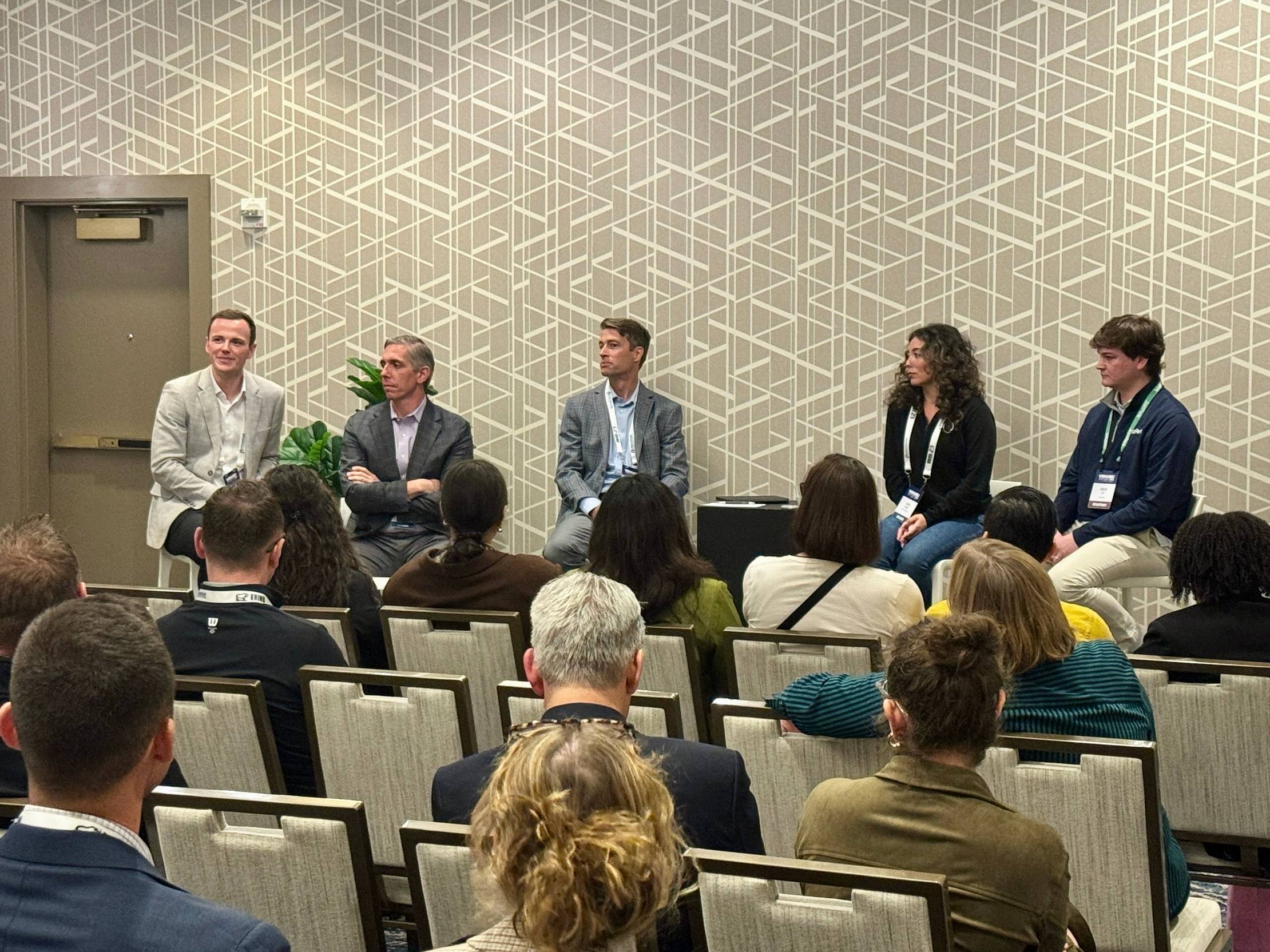
At VenuesNow 2026 in Seattle, JustPark's Drew Lee joined a panel on planning for efficient mobility with Mike Sciortino (General Manager, UBS Arena), David Reed (ModeScore & ActiveScore), and Dani Crain (Oak View Group), moderated by Declan Weir of Stantec. The conversation covered how venues are managing the full arrival-and-departure experience: parking, transit, rideshare, pedestrian flow, and the operational economics behind all of it.
The through-line of the discussion: mobility is no longer a back-of-house parking problem. It is part of the fan experience, a major operational consideration, and increasingly a strategic lever for venue performance. Here are six takeaways from the session.
1. Mobility is a venue viability issue, not just a revenue line
Mike Sciortino was candid about the economics at UBS Arena. His team parks over 4,000 cars for some events, runs rideshare for up to 1,500 vehicles, and coordinates with two bus systems and a train line. Most of that doesn't produce margin on an individual event. It makes the venue viable.
In a market competing against other arenas — Mets games, Yankees games, and other live sports — mobility operations have to be close to perfect every time. Sciortino noted that UBS Arena has one meaningful advantage over several New York venues: it has parking, and his team leans into that. At the same time, he was clear that fans will choose other venues if a venue can't deliver on parking, a good train experience, or a good rideshare experience. Mobility operations have to hold up on all fronts.
2. Mobility is a team sport
Every example of a venue doing this well involved cross-agency coordination. Montreal's F1 race drove a meaningful increase in transit ridership this year after the operator brought the transit agency, local police, and city together in a single plan. Melbourne's Australian Open shifted rideshare driver behavior at scale by putting enforcement officers on the ground with real authority.
Downtown Atlanta offers a strong template. State Farm Arena, Mercedes-Benz Stadium, Centennial Yards, and surrounding venues hold joint leadership meetings and coordinate directly with rideshare companies and local police. During the FIFA World Cup, that coordination produced multiple rideshare zones mapped to different destinations, built in advance by the venue group together with the city.
The takeaway for venue operators: no single party has the authority to manage fan mobility alone. The relationships have to be built before the disruption, not during it.
3. Rideshare remains an unsolved problem
Rideshare was the panel's most-returned-to topic, and no one claimed to have solved it. Venues provide the curb space, signage, and manage the impact on the fan experience while rideshare companies capture the revenue from the trips. The airport surcharge model, where airports collect a per-trip fee from rideshare pickups, came up as one of the few existing templates for how venues might eventually capture a share of that value.
A few practical lessons stood out from venues getting ahead of the problem:
Chase Center distributes rideshare load across four separate pickup and drop-off zones.
Mercedes-Benz Stadium uses signage to redirect fans from long rideshare queues toward MARTA, the Atlanta transit system.
Austin's new stadium leads its mobility web page with transit before explaining rideshare.
David Reed of ModeScore & ActiveScore cautioned against treating rideshare as inherently sustainable, pointing out that it can increase total vehicle trips. A train moves significantly more people per unit of road space, so space efficiency matters, not just energy efficiency.
One lever operators do have on event days is pre-selling parking, which gives them something rideshare demand doesn't: a predictable number of fans arriving in cars, mapped to specific lots.
Learn how JustPark Passes gives venues more control over event-day arrivals →4. A full parking lot isn't the same as a successful mobility operation
The panel's most direct advice to anyone building a new venue: build the operations plan before the concept design is finalized. A million dollars during design is very different from a million dollars after construction. Separating pedestrian and vehicle flow at different grades is expensive to retrofit and cheap to design in.
Sciortino described what happens when that work isn't done up front.
"We've never run out of parking spaces, so we accomplished that goal—but we didn't solve the overall mobility problem."
What wasn't designed in was how fans arriving by train would move through the campus. The walking path from the station cuts across a 2,400-space lot, producing a constant stop-start conflict between pedestrians and vehicles on every event night. The venue is now considering how to address the conflict, potentially through a pedestrian bridge.
5. Every event needs its own mobility plan
Dani Crain of Oak View Group made the case that identical attendance numbers can produce entirely different mobility operations. A K-pop show, a country show, and a Latin show might put the same number of fans in the arena, but the mix of rideshare, transit, parking, and shuttle use looks nothing alike. Running all three events with the same staffing model is both expensive and unreliable.
With years of comparable data (Ticketmaster buyer geography, weather, attendance, and mode-of-arrival counts), Sciortino said hitting roughly 85% accuracy on predicting arrival volume and mode for an upcoming event should be within reach. The payoff: fewer staff hours scheduled before fans show up, better rideshare and transit messaging matched to the audience, and shorter egress at the end of the night. Drew Lee's response from the panel: "That's exactly what JustPark is building toward."
See what JustPark is building for data-driven venue operations →6. Parking is becoming a flexible mobility asset
Three forces are reshaping what a venue parking lot can be:
Dark-day monetization is becoming a real revenue line. Venues are hosting school-bus EV charging on empty lots, selling inventory to other nearby venues' events (State Farm Arena sells parking for Mercedes-Benz Stadium and Centennial Yards events, for example), and running outside activations.
Dynamic pricing is moving from spreadsheet guesswork toward rate benchmarking against comparable venues, with AI expected to make recommendations materially more sophisticated into 2027.
Autonomous vehicles could introduce another use case entirely. As more fleets move onto the road, venue parking could become overnight staging, charging, cleaning, and operations space, turning the parking lot into infrastructure for the broader mobility ecosystem, not just event-day parking.
How JustPark fits in
Across all six lessons, the panel kept returning to the same idea: venue mobility can't be solved one parking lot, curb, or event at a time. The operators getting ahead are treating mobility as a connected system—and that's the direction JustPark is building toward.
JustPark is the operating system behind event parking: pre-sales, inventory, staffing, pricing, and the full event-day arrival built into one platform. Passes gives operators pre-sold arrival data they can plan against, with event, season, and complimentary parking all managed through the same system. Prime takes it from there on event day, validating passes and processing on-site transactions at the gate. And Plate Validator, Prime's LPR-powered add-on, is where that validation is headed next: automatic recognition at the lane with no manual scan required.
The takeaway is straightforward: the future of venue mobility belongs to operators who can connect the parking lot, the curb, the street, and the fan experience into one operational picture. If any of this maps to a problem your operation is working through, get in touch.