From paper tickets on the dash to 18 cars a minute: inside Spokane's event parking operations
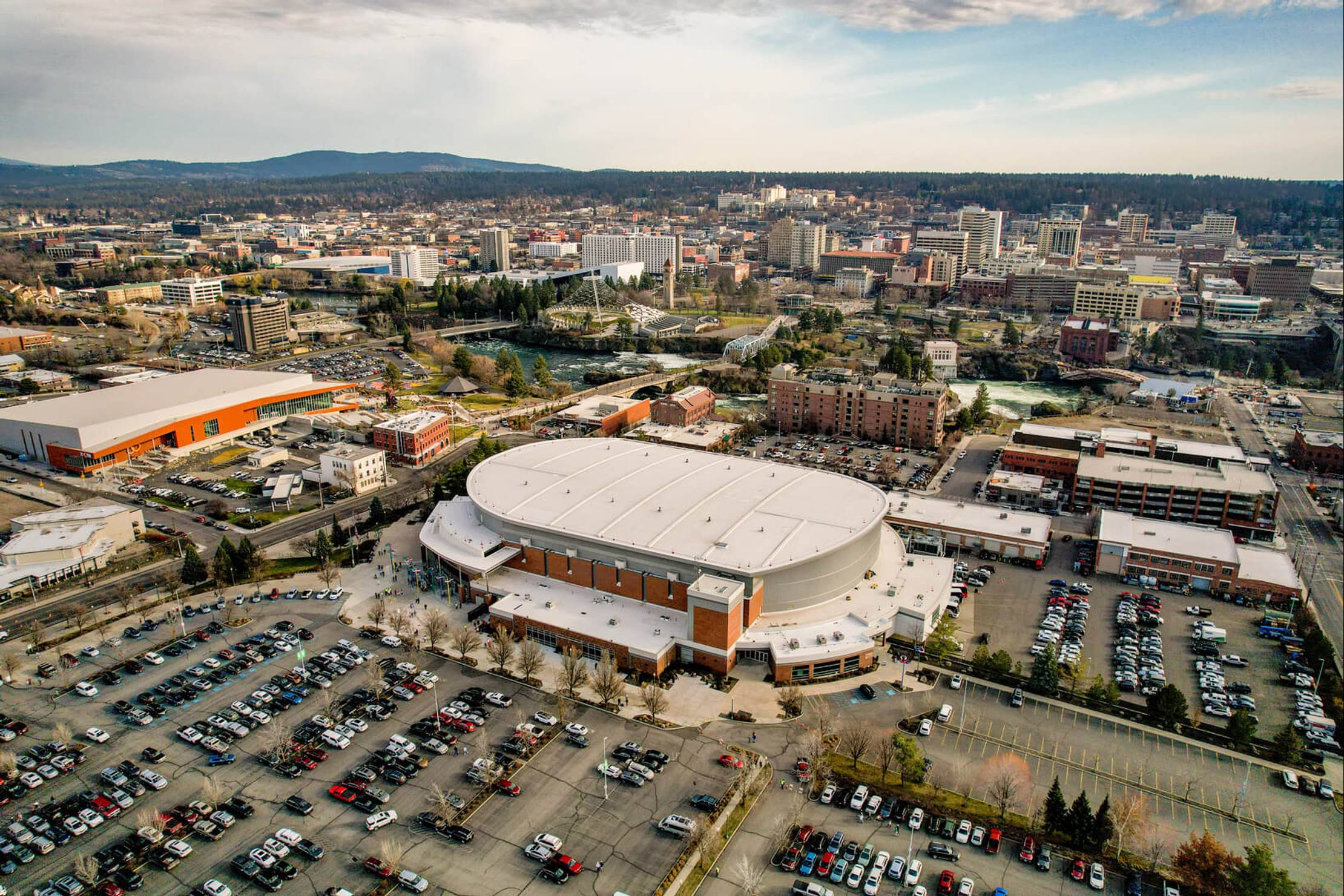
In 2025, the cars parked at Spokane Arena would have stretched from Spokane to Missoula, Montana, and back again. Just a few years earlier, that kind of insight was impossible. Before The Car Park took over parking operations for the Spokane Public Facilities District in 2023, drivers received a paper dashboard pass, and “there was zero information collected,” says Scott Taylor, General Manager of The Car Park – Spokane.
The PFD runs five venues across two campuses, from Spokane Arena to the Spokane Convention Center, with a garage and lots serving events that sometimes overlap. At the PIPTA Conference 2026, Nic Lawrence, the PFD's Director of Event Services, took the stage with The Car Park's Scott and Dane Lyon, along with JustPark's James Guth and Emily King, to explain what changed once the operation could see itself.
The Car Park runs JustPark Prime handhelds at the entrances, and every transaction feeds into the backend of Suite for live analytics. Nic put the PFD's stance plainly: "We love data. Don't make any decisions without it." That starts in the lots on event day.
Filling every space without overselling one
Nic's first requests were basic but impossible under the paper system: total cars parked, vehicle arrival times, and how occupancy changes across the PFD's lots.
Now every car is checked in on a Prime device. During an event, Scott works from JustPark's Live dashboard on his phone or laptop. "This is what I actually live and die in," he says. On one example night, one lot showed 399 cars in 399 spaces, while the Lexus lot sat at 113 of 121.
Scott checks those counts "like every minute," because the goal is to fill each lot completely without selling a space that doesn't exist. "Parking is the first impression that customers get when they're going to a venue," he says. When a lot fills, he radios its cashiers, sends them to an entrance that still has room and reminds them to switch lots on their devices so the inventory stays accurate.
Cars exiting a lot while others are entering complicates the count, especially on multi-event days. JustPark's exit tracking handles that with a button on the device that counts each exit and returns the space to inventory, which is why one example showed 1,072 transactions but only 1,063 cars parked.
Most exits are tracked during the fill, "so that we know how many spots we can continue to fill," Scott explains. It also spares him from running through the lot to count cars by hand, which he calls "not a highly desired feature at my age."
The device behind the live counts. JustPark Prime scans prepaid passes and takes credit card, contactless and mobile wallet payments at the entrance. Every transaction syncs to Suite in real time, so attendants and managers see the same inventory. See how Prime works →
A promise made at the box office
Before an event day, guests can buy parking with their event tickets, so The Car Park must hold a space for every prepaid pass sold, and Scott watches that count "religiously." If inventory runs low before prepaid guests arrive, the team closes the entrances to protect their spaces.
A full prepaid turnout is rare, though. If 200 passes are sold, Scott says, "you can expect almost a 10% deduction" for no-shows, and he sells that 10% to drive-up parkers. Post-event data on similar events helps set that oversell rate.
The cars nobody was paying for
The finding in the data that surprised the PFD most had nothing to do with paying guests. It came from the cars that park for free.
In one example event, 21 cars parked without paying. Fifteen were already on the property when the team arrived, most likely monthly parkers. Five were PFD staff and vendors, and one was a Lexus pass holder. Each was recorded by type, so a 21-car gap in payments came with an explanation. According to Scott, this is where the PFD "learned exactly how much parking was costing them."
Employee parking was the biggest surprise. Nic describes the old approach as "a little bit of the wild west," where anyone with a sticker could park. With tracking in place, the PFD found one employee working while four of his cars sat in the lot.
At the convention center, where the 400-space garage is shared with hotel staff, 65 PFD employees parking at no charge would mean 65 fewer paying spaces, and Scott can show exactly why.
The PFD now sets clearer limits on employee parking, and they can move employees to other locations on high-volume days. The Car Park can also cap how many of a given pass the devices will accept for an event, with an alert to Scott and every cashier when the cap is reached.
Managing complimentary parking at your venue? JustPark CompPass distributes digital parking passes to staff, vendors, sponsors and VIPs, so you know who is parking for free before they arrive. Explore JustPark Passes →
Using the last event to plan the next one
JustPark's Analytics breaks arrivals into 15-minute intervals and shows exactly when traffic peaks. The fastest rate of ingress the team has recorded is 18 cars a minute, which, Scott notes, "when you have 1,000 stalls, you can fill the lot pretty fast." The PFD had never had that information before: how many cars arrived, and when.
Arrival data now shapes staffing for both organizations. The Car Park schedules parking attendants around the arrival peak, and the PFD uses the same timing to staff inside the venue. Repeat events make the forecast more reliable. When the team overlaid arrival data for a conference that has returned to Spokane several times, the patterns varied very little.
In the garage, knowing the occupancy rate and expected volume lets The Car Park match attendants to a single entrance and exit, which Scott says has helped reduce labor costs. Because the arena sits in a neighborhood, the same data also helps the PFD decide whether to bring in police for traffic control.
The data doesn't replace judgment, though. A Wednesday hockey game draws a much smaller crowd than a Friday game with the same 7:05 puck drop, and Scott acknowledges "there is a little bit of intuition" involved.
Scott calls overlapping events "probably one of the biggest takeaways." Because the team knows when traffic leaves, how long it takes to clear and how quickly a lot can refill, the convention center garage can now serve an event at the hotel and a convention in what Scott calls a "double flip," turning it over twice in one day.
What the numbers show
In The Car Park's first year managing PFD parking, revenue rose 40% compared with the figures the PFD had shared from before the transition. A price increase in 2024 makes later comparisons less direct, but revenue has continued to grow year over year. The panel linked that growth to using the space more effectively and creating a better guest experience.
In 2023, a parked car left behind a piece of paper. By 2025, the arena alone parked enough cars to reach Missoula and back, and the PFD knows when they arrived, where they parked, which ones paid and why some didn't.
Nic's standard is simple: "We don't make any decisions without talking about the data."
Running event parking across multiple venues, lots or overlapping events? See how JustPark gives your team live inventory, exit tracking and post-event arrival data. Fill out the form below to get started.