University Event Parking: Five Lessons from Notre Dame and Ohio State
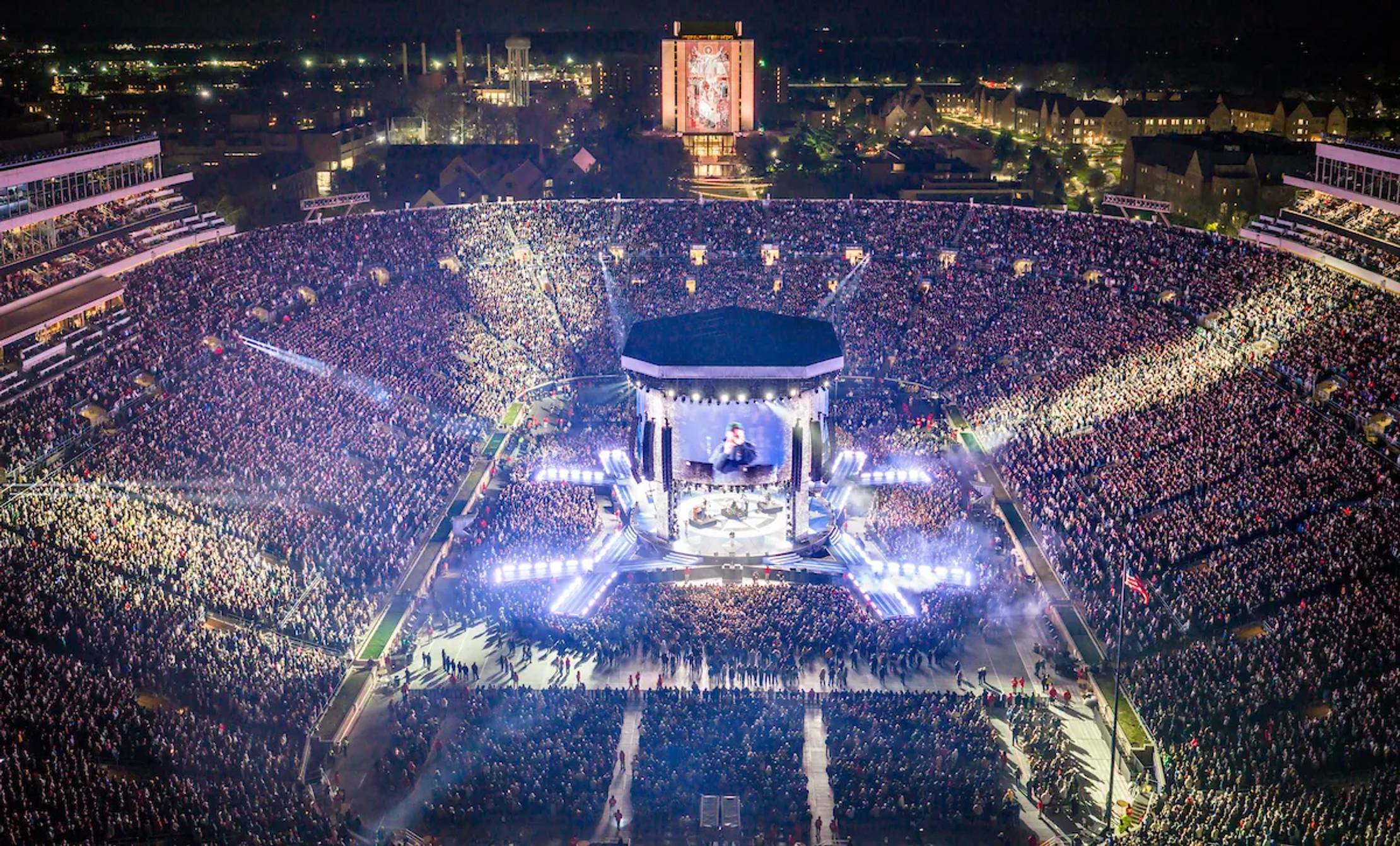
Universities with major football programs have spent decades building serious parking operations. But managing a sold-out stadium concert is a fundamentally different challenge, and most institutions are figuring that out in real time.
On April 29, JustPark hosted an IPMI Learning Lab: Applying Game Day Best Practices to Campus-Wide Events. We were joined by Brian Riggs, Parking and Traffic Program Manager at the University of Notre Dame, and Brett Litteral, Operations Manager at CampusParc for Ohio State University — two people who have run event parking at enormous scale and learned exactly where the football playbook does and does not translate.
Here are the five things that stood out.
1. Concert crowds are not football crowds. Build a separate playbook.
For football games at Notre Dame, roughly 70 percent of attendees are returning regulars. They know the lots, they know the routes, they've parked there dozens of times. The communication plan can assume a baseline of familiarity.
For a concert, that ratio flips. Brian Riggs described Notre Dame's first major stadium concert — Garth Brooks in 2018 — as a lesson in what happens when you assume the football playbook transfers. It didn't.
"The vast majority of the audience had never been to Notre Dame for an event. We were over-relying on familiarity that just wasn't there." — Brian Riggs, University of Notre Dame
Since then, Notre Dame has built a completely separate operations document for concerts: different communication timelines, different staffing models, different digital signage strategy. By the time Luke Combs came to campus in 2026 — Notre Dame's largest concert ever, with 74,552 attendees — they had 18 to 20 message boards deployed across the campus, all managed remotely and updated in real time.
The takeaway for any university starting to expand its events calendar: assume your concert audience has never been to your campus before. Communicate accordingly.
2. Concert arrivals come in a compressed surge. Staff for that window.
Football fans arrive gradually — some eight hours before kickoff for major games at Notre Dame. Concert crowds compress that entire arrival window into a two-to-three-hour period.
For Luke Combs, the main act went on stage at 9 p.m. The peak parking arrival was between 3 and 4 in the afternoon. By 5:15, traffic was already slowing.
That means the staffing model for a concert cannot look like the staffing model for a football game. You need more people in a much shorter window, concentrated at precisely the right time. Getting that wrong means long queues, frustrated fans, and a poor first impression before the event even starts.
Riggs also noted that concert-goers are increasingly pre-booking their parking. Notre Dame has shifted toward more pre-sales with each successive event, driven both by better historical data and by a shift in consumer behavior. People want to know where they're parking before they get in the car.
3. Real-time lot data changes how you manage on event day.
Before JustPark, Brian Riggs managed a 77,000-person event by making phone calls — trying to get rough capacity counts from lot attendants in the middle of a packed campus with degraded cell signal.
Now, from his seat in Notre Dame's command center, he pulls up a live dashboard on his laptop or phone and sees every lot in real time: how many pre-sold passes have scanned in, how much drive-up inventory is left, what percentage capacity each location is at.
Ohio State's Brett Litteral runs a similar operation. Her management team walks the lots during events with the JustPark suite open on their phones. They feed live capacity data directly to the police department, who adjust the freeway message boards to steer traffic toward available lots. When a garage starts filling faster than expected, they can push incoming traffic somewhere else before the problem compounds.
Ohio State also runs a public-facing tool called Space Tracker on their website, which shows permit holders live garage availability before they leave home. On event days, it becomes a way to reduce confusion before anyone gets on campus.
The theme from both operations: real-time visibility is not a reporting tool. It's an operational tool. The decisions you make under pressure — where to redirect traffic, when to open overflow areas, how much drive-up inventory to release — depend on knowing what's actually happening in your lots right now.
4. The campus never stops. Plan around it, not against it.
A standalone venue can close its parking lots for an event. A university cannot.
Ohio State manages between 50 and 75 events per month, on top of a 24/7 medical center that cannot be disrupted under any circumstances. When a Bruno Mars concert falls on a Wednesday, medical center staff are still arriving for morning shifts and leaving in the afternoon. Students and faculty are still on campus all day. Normal operations continue at full speed.
"You run the event on top of everything else, not instead of it." — Brett Litteral, CampusParc / Ohio State
That requires a level of cross-functional coordination that goes well beyond setting up a lot and hiring staff for the day. Ohio State runs regular touchpoints with athletics, the medical center, the student union, and every arts venue on campus. Everyone sends their calendar. The parking team pulls it into a single view and works through the logistics for each day — which lots are designated for what, what the staff plan looks like, and what device configurations need to be set up in advance.
The lesson for institutions entering this space: the more events you host, the more disciplined your planning infrastructure needs to be. Execution on the day is only as smooth as the prep behind it.
5. Every event is a data point. The operation gets smarter over time.
Both Brian Riggs and Brett Litteral emphasized how much their operations have improved since they started capturing structured event data.
Notre Dame has concert parking data going back to 2018 — arrival curves, pre-sale versus drive-up ratios, how each lot filled by the hour. That record is what they used to plan Luke Combs, and what they'll use to build the plan for AC/DC in September. The institutional knowledge compounds, but only if the systems are in place to capture it.
Ohio State runs a similar process. With 50 to 75 events a month across multiple venues, the ability to reference what worked and what didn't from previous events is what makes that volume manageable.
"Get your data infrastructure in place early. Because every event you run is a data point." — Brian Riggs, University of Notre Dame
How JustPark Prime and Suite power these operations
Both Notre Dame and Ohio State use JustPark Prime devices on event day. Prime is a handheld device that lets parking staff validate pre-sold passes and process on-site payments in a single step. It integrates with ticketing providers including Ticketmaster, Paciolan, SeatGeek, and AXS, as well as PARCS systems like Amano and Parkonect — which means gate access, validation, and payment all happen in one workflow rather than three.
The real-time dashboards Brian Riggs and Brett Litteral described are part of JustPark Suite, the centralized backend that connects every product in the JustPark ecosystem. Suite handles event configuration, inventory management, device permissions, and live reporting across every lot simultaneously. It's what lets a parking manager in a command center see, in real time, what's happening across a campus of 8,000 to 9,000 vehicles — without making a single phone call.
For universities managing a growing events calendar alongside normal campus operations, that combination of Prime and Suite is what makes the operational complexity workable at scale.
Watch the full session
If you're thinking about how your institution handles large-scale non-football events — or if you're starting to see your campus used more like a venue and less like a university for a few weeks a year — we're happy to talk through how JustPark works in practice.