5 lessons from Ohio State and Denison Parking on running event and everyday parking as one operation
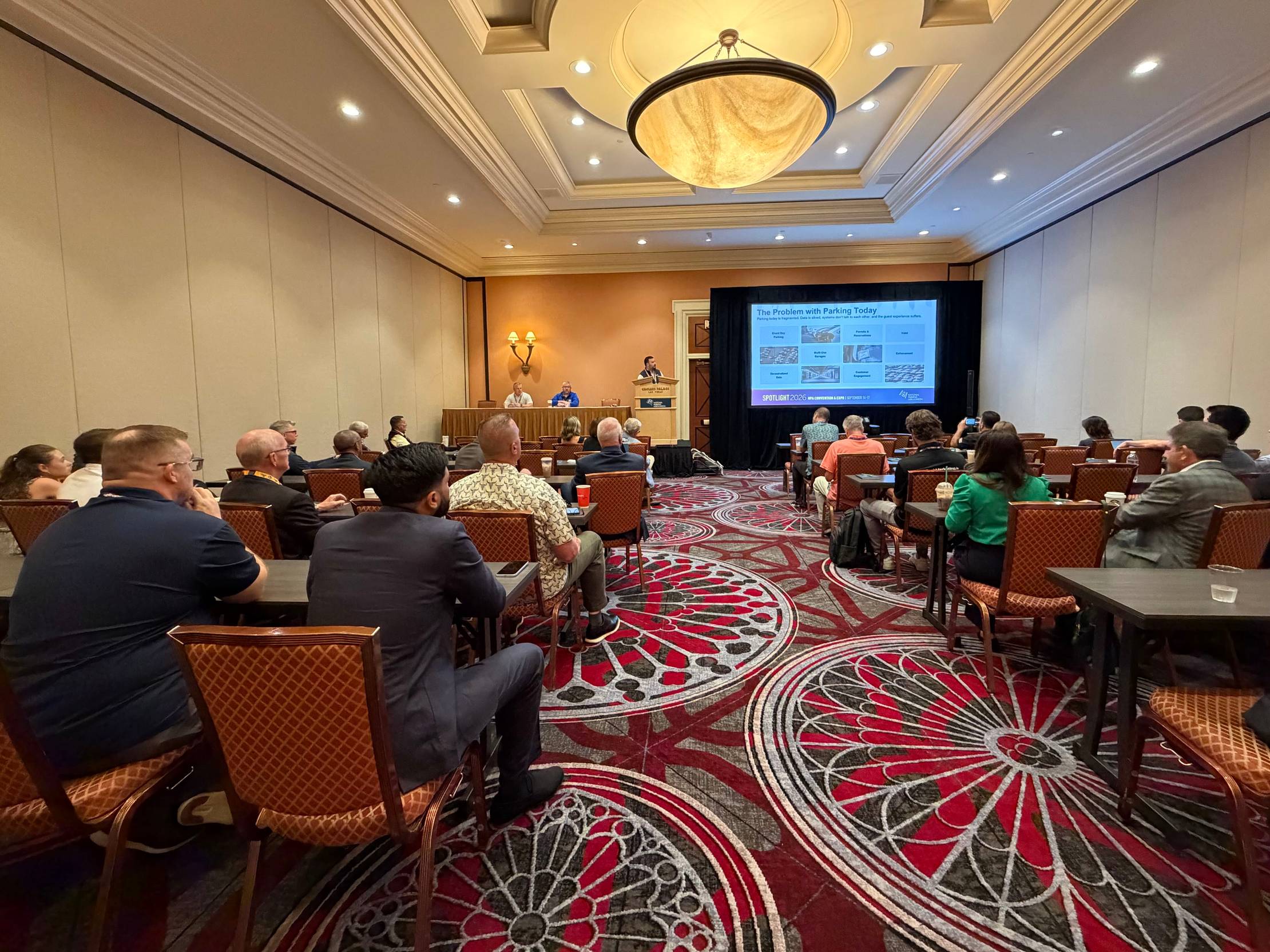
At the 2026 National Parking Association (NPA) Convention & Expo, JustPark's Mitch Carter sat down with Keith Palma of CampusParc, which manages the 38,000-space parking system at The Ohio State University, and Bill Rasi of Denison Parking, which operates across Indianapolis, Denver and other urban cores. The panel, "Beyond the Silo: How Operators, Cities, and Campuses Are Rethinking Everyday and Event Parking," dug into the operating reality behind the industry's biggest shift: event and everyday parking are no longer two separate businesses. Here are five lessons from the session for anyone running mixed-use parking at scale.
1. The first data problem to solve is who is coming and when
Ohio State hosts more than 3,000 events on campus every year, ranging from 25-person meetings to football games drawing more than 110,000 attendees at Ohio Stadium—all layered on top of a hospital in the middle of campus and the day-to-day needs of students, faculty, and researchers. Keith Palma's biggest data problem is not occupancy or revenue, it’s communication. Departments book events, buy validations and reserve garages without a shared view, and CampusParc gets the blowback when a validation stops working because a garage has flipped into event mode. The fix is not a bigger dataset. It is one place that pulls booking, validation, permit and event information together so every stakeholder is looking at the same picture before an event day begins.
2. Historical data can settle fights that policy cannot
CampusParc's clearest example of data-led decision making came from a Friday-night stand-off between athletics and student life. A garage near Ohio Stadium is used for ADA overflow on football Saturdays, and ADA demand has grown enough that overflow ran out. Athletics wanted the garage closed to transients on Fridays. Student life pushed back hard. Keith's team pulled two years of Friday-night ticket data and found a clean line at 8:00 p.m. – transients arriving before 8 typically left the same night, while anyone arriving after 8 was still there Saturday morning. The garage now closes to transients after 8 p.m. on football Fridays, keeps permits in, and a garage 500 feet away absorbs the overflow. What used to be a manual analytics request is now a self-serve report that runs in minutes.
3. The line between event and everyday parking is already gone
Bill Rasi's view from Denison Parking's urban markets is that hybrid work has done more to reshape parking than any single technology. Tuesdays through Thursdays are full, Mondays and Fridays are empty, and event patrons are only part of the demand on a game or concert night. Downtown restaurants, bars and hospitality staff need the same inventory. That has pushed Denison to sell event covers earlier in the day, keep validations working longer, and stop running events and everyday as separate businesses inside the same facility. Keith framed the same shift differently at CampusParc: instead of chasing new revenue, protect the revenue you have by moving departmental parking off paper hang-tags and onto a digital platform, and by loading team-travel license plates into the permit system rather than blanket-declaring 15,000 surface spaces unenforced.
4. Better inventory management beats new inventory
Neither panelist is banking on new garages to grow the operation. Bill's approach is closer to airline revenue management than traditional parking pricing: if a facility's posted daily max is $27 but the average ticket is $7, the real ceiling is not $27. Push price to a plateau, hold, then push again. Measure volume alongside revenue, and stop reporting occupancy at 10 and 2 when the real bounce is at 11 and 1. Keith's version is inventory allocation by user type: cap student permits at 100 in a high-demand garage, staff at 200, oversell against known turnover, and hold guaranteed spaces for the population you can control. In both models, the point is the same. The next unit of revenue and the next unit of capacity are already inside the fence, waiting to be found in the mix, the timing and the rate band.
5. The useful AI story is internal, not customer-facing
Asked where AI is actually working today, both panelists ignored the hype and pointed at operations. Keith is building an internal tool that scrapes CampusParc's website so a five-person customer care team can answer questions faster. Training a new hire currently takes three weeks in the classroom plus two weeks on easy tickets before they can handle a complex permit question. A chatbot fed on the team's own content shortens that curve and takes pressure off tenured staff. Bill uses AI to compress the Excel work that eats four to six hours into a few minutes of summary a manager can act on. His next horizon is predictive: pull event feeds, ticket counts and historical demand together so AI can recommend staffing levels before an event, not audit them after. Neither leader is chasing autonomous anything. Both are using AI to remove the parts of the day that were never a good use of human time.
How JustPark Insights fits into the picture
JustPark Insights is the business intelligence layer built for operators running both event and everyday parking in the same facilities. It pulls booking, occupancy, permit, validation and event data across parking vendors into one view, so teams like Denison Parking, which is vendor-agnostic across Indy and Denver, can see the whole picture rather than reconciling reports from four systems. For campus and venue operators, Insights makes the analysis Keith described, comparing arrival-time patterns to event-day demand, something a manager can run rather than a request routed to a data team. It sits alongside JustPark's operator products for event-day sales (EventPass, Prime, SeasonPass) and everyday operations (Permits, On-Demand, Enforcement), which is what "bridging the gap" between the two sides actually looks like in production.
If you want to talk through how any of this applies to your operation, fill out the form below and our team will be in touch.